
Empowering citizens with practical legal information
Redesigning Clicklaw to help BC with legal questions
Client Courthouse Libraries BC (CLBC)
EMPOWERING BRITISH COLUMBIANS WITH LEGAL KNOWLEDGE
Courthouse Libraries BC (CLBC) embarked on a transformative journey to redesign their Clicklaw website, aiming to enhance user experience and content accessibility. The project was a collaborative effort between CLBC and Spatial Research + Design, leveraging the expertise of both organizations to create a more user-friendly and inclusive platform for accessing legal information and answering legal questions.
A HUB FOR RELIABLE LEGAL INFORMATION
Clicklaw helps British Columbians find the legal information they need to determine next steps in their legal journey by providing access to reliable legal information all in one place. Managed by the Courthouse Libraries of BC (CLBC), the Clicklaw website is an important content and information hub aimed at supporting British Columbians at any level of legal familiarity.
THE CHALLENGE
The Clicklaw team at CLBC needed to move their vast amounts of content off their outdated web platform, and wanted to take the opportunity to transform their web presence and improve their reach. They engaged Spatial to review and re-design the Clicklaw website with the goals of enhancing UX and inclusivity and defining a content strategy approach to prepare for migrating their to a new platform.
The primary objectives of the Clicklaw project were to:
- Ensure the website design would be inclusive and accessible to all users regardless of legal background.
- Enhance the overall user experience by improving navigation, functionality, and visual design.
- Provide a cohesive and comprehensive user experience to Clicklaw’s services across channels.
UNDERSTANDING THE CURRENT STATE:
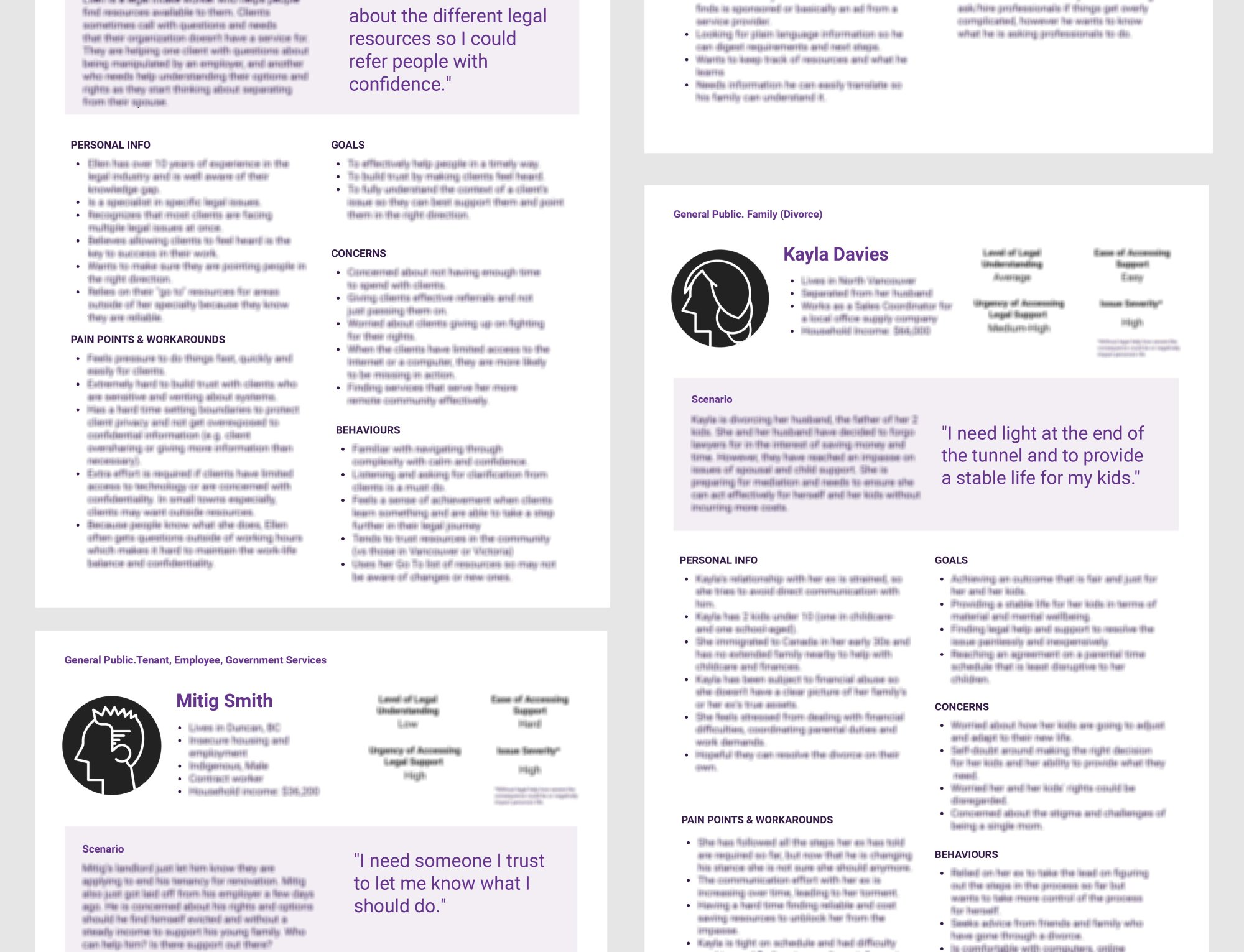
The project began with a thorough needs analysis and scope definition phase. This involved understanding the audience's approach to seeking and using legal information and resources, addressing questions or gaps in audience understanding, and testing assumptions. We worked with the Clicklaws team and partners to define key audience personas across financial, demographic and internet access spectrums. Then Spatial conducted a content audit and audience research to evaluate the current state of the Clicklaw website and identify opportunities for improvement.
RESEARCH-DRIVEN INSIGHTS
Audience research revealed that users typically start their legal journey with keyword searches on Google, by talking to family and friends, and stumbling onto chats and discussion forums. People were not necessarily familiar with Clicklaw at the outset but viewed it as a reliable source once they were exposed to it, and there was an expectation that content provided by Clicklaw would be curated and vetted. Based on these findings, the team made sure the core information architecture would immediately indicate the range and depth of legal topics available while surfacing Clicklaw’s purpose and credibility and making it easy to incorporate mixed content types like infographics and video as well as text.
DESIGNING FOR INCLUSIVITY
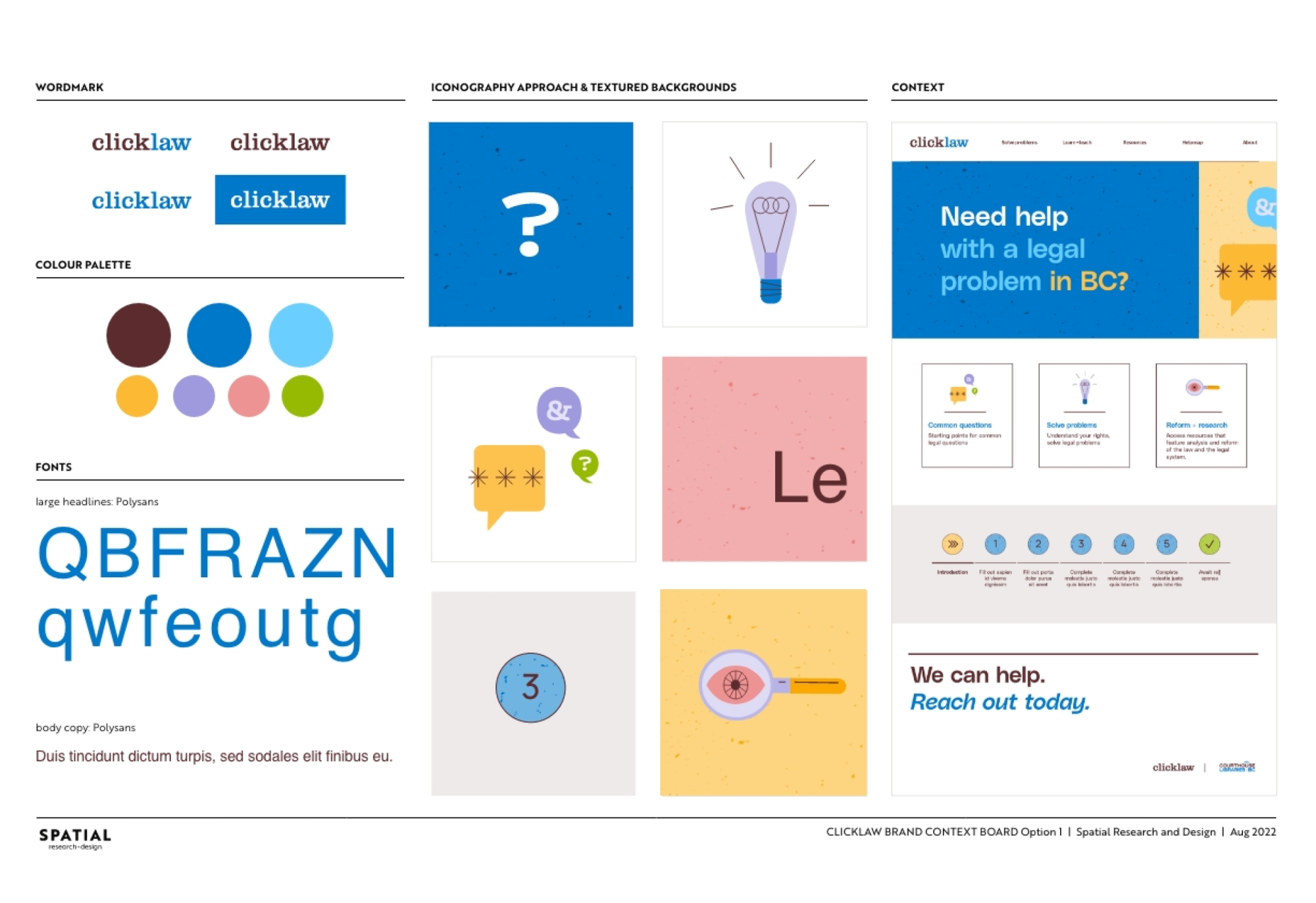
The design phase focused on creating initial design concepts, testing and getting feedback on the proposed value proposition, and making necessary design changes based on user feedback. The team worked closely with CLBC stakeholders to ensure the design met the needs of the target audience, aligned with the project's inclusivity goals, and could be managed by internal content teams.
TRANSFORMATIVE OUTCOMES
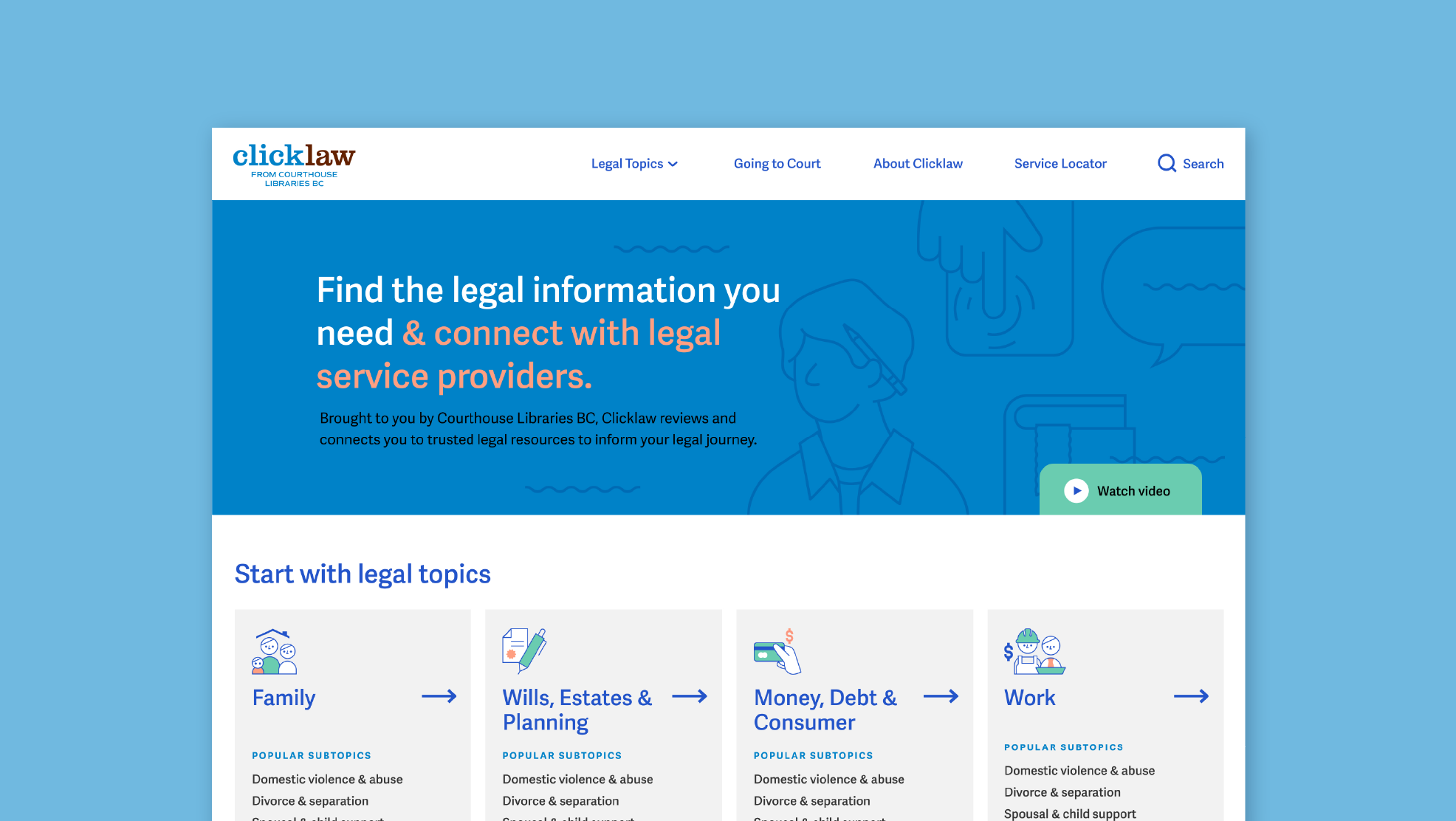
The redesigned Clicklaw website successfully achieved its objectives, providing a more inclusive and user-friendly platform for accessing legal information. The project resulted in:
- Improved navigation and functionality, making it easier for users to find the information they need.
- Enhanced visual design, creating a more engaging and accessible user experience.
- A cohesive and comprehensive approach to content, addressing the needs of users across different channels and services.
The Clicklaw project is a testament to the power of collaboration and user-centered design demonstrating how a focus on inclusivity and user experience can transform digital platforms, making legal information more accessible to everyone.