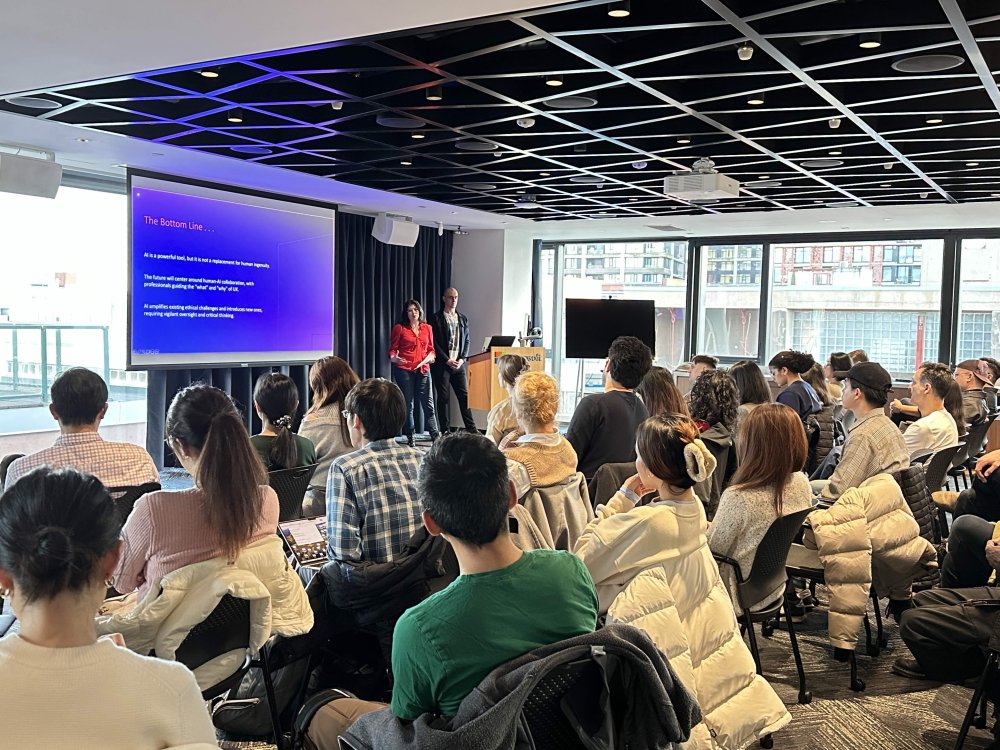

I recently completed a bit of personal reading that ties into my career as a UX researcher.
Back in February 2022, I wandered into a bookstore looking for a volume on time management. I was perusing the ‘productivity’ section, hoping to stumble across a book that could teach me how to complete all the tasks and commitments on my plate while still holding on to my sanity.
I picked up a book called, “Four Thousand Weeks: Time Management for Mortals” by author Oliver Burkeman. While I was not amused by the cover graphic – a set of aging bananas (my least favorite fruit) – I was intrigued by the reviews on the back of the sleeve that called it a ‘reality check’, ‘the most important book ever written on time management,’ and ‘an important and insightful reassessment of productivity.’
I bought it, took it home and, ironically, didn't have time to read it.
After only recently picking it up again, I discovered that it isn’t just another book offering cheap time hacks; the author’s goal is to dispel the delusion that we, as finite beings with limited lifespans, can master time to become the hyper-productive, highly-efficient demi-Gods we believe we ought to be. In truth, it is a sobering read. I recommend it to anyone and everyone that finds themselves fighting against time and aiming for hyper-productivity in their life and in their work. Even though it is not specifically about the field of UX research, I found myself reflecting on how these twisted ideas around time, productivity, and control have poisoned our work as UX professionals.
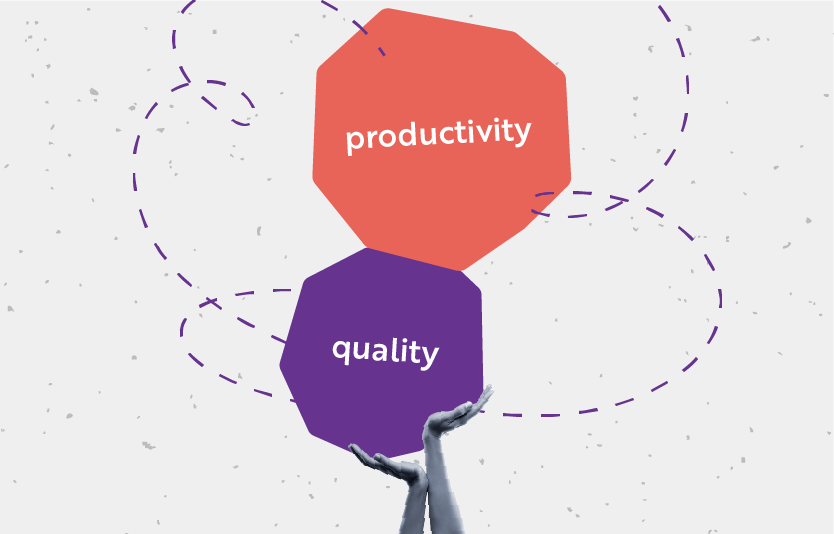
One particular area of Burkeman’s book speaks to the pitfalls of convenience. Making the shift towards convenience is a way in which we as human beings attempt to master time. Generally speaking, this shift involves the creation and application of various degrees of technology that result in a reduction of demand on our limited resources (time, attention, strength, etc). Silicon Valley itself is filled with companies predicated on the value of either eliminating or accelerating tedious, time-consuming activities in the name of increased convenience; while their solutions solve pain points and introduce an element of smoothness, it’s important for those of us creating the solutions to consider the unhelpful or unintended trade-offs we may be enabling – or forcing – as a result.
Reflecting on my own work, a lot of the projects I’ve worked on over the past 6 years as a UX professional have resulted in increased ease and convenience. Something I hadn’t considered until more recently, however, is that an increase in convenience doesn't necessarily result in increased wellbeing.
My supervisor recently pointed out the gig economy dilemma. In the last 10 years, there has been an explosion of companies built around increasing convenience that ultimately end up eroding the local economies on which they rely to make money. Food delivery services, for example, promise the convenience of a meal delivered – but the restaurants and the delivery drivers end up bearing the brunt of the financial and operational stress; in a similar manner, companies like AirBnB make finding short-term vacation rentals much easier, but contribute to the loss of affordable rental housing for local residents.

The work we do as UX professionals does not exist in a vacuum; the products and services we influence are all part of greater, more complex systems. Not only, then, should our focus be on improving the ‘thing’ we are working on, but also more widely our work should seek to improve the system within which our solution exists – or, at the very least, it should not negatively affect it. Just as doctors have a hippocratic oath and Canadian engineers wear an iron ring on the pinky finger of their writing hand, so too should UX professionals internalize a greater sense of ethical responsibility for the wellbeing of others in the world.
Thankfully, we at Spatial advocate strongly for the inclusion of research as an integral part of our design work. Through employing research and helpful frameworks such as GBA+ throughout the design process, we are better equipped to uncover, mitigate, and avoid potential harms. Of course, part of the challenge we UX professionals face in employing these frameworks is we are often called to slow-down our research and design processes to accommodate them – something that is generally frowned upon by folks that monitor a company’s bottom-line. The need to advocate for such approaches is indeed part of our glorious work as UX’ers, however that topic is best suited for another article.