
A VR platform becomes a virtual cultural centre for the black community in Vancouver, Canada
The Fulbright Canada post-COVID Challenge, a competition to solicit creative initiatives and designs from youth in Canada and the US, addresses challenges of a post-COVID world. Specifically, teams were invited to devise solutions that address social and public health, contribute to digital transformation and strengthen social cohesion and economic recovery.
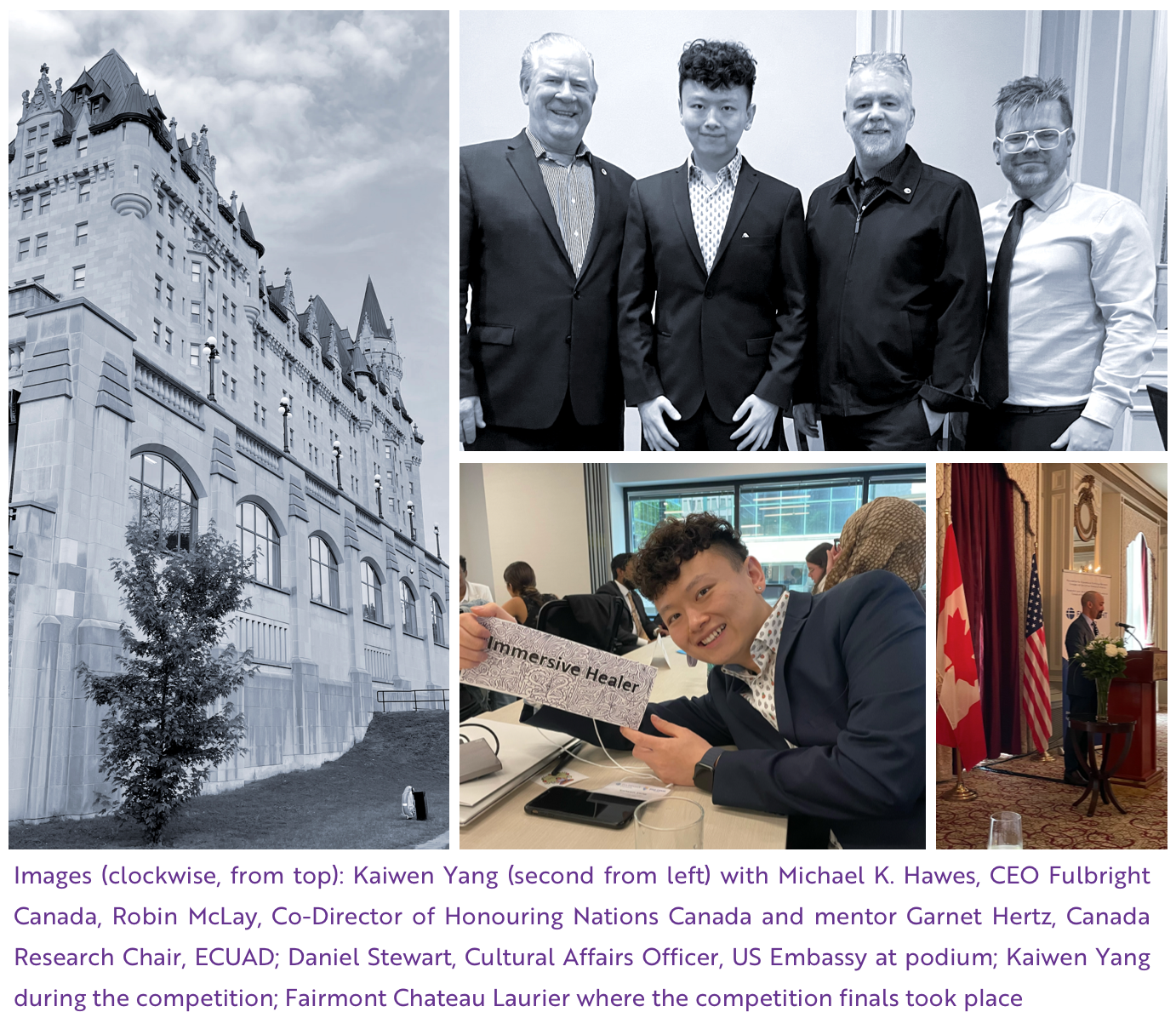
On June 24th, Spatial’s colleague, Kaiwen Yang was invited to Ottawa to participate in the final phase of the Fulbright competition with his project, Immersive Healer, which he developed while working on his masters.
Here, we ask him a few questions.
Can you describe the Immersive Healer project, and the problems it addresses?
The Immersive Healer Project is a virtual reality (VR) experience inspired by Hogan's Alley, a neighbourhood in Vancouver first settled by black immigrants in the early 20th century. Displaced by Vancouver's downtown expansion in the 1960s, few remnants of the community remain today.
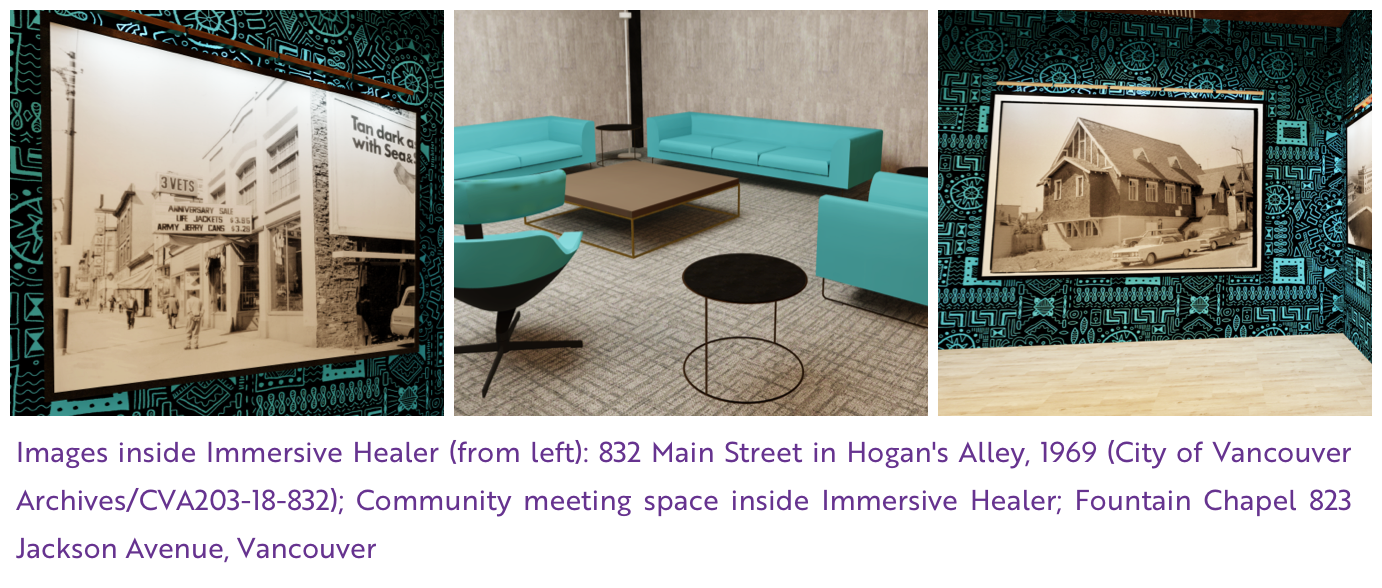
Prior to the pandemic, Lama Mugabo, founding member of the Hogan's Alley Society gave walking tours of this now "erased" area: when Covid happened, I saw an opportunity to create a virtual version of this neighbourhood, primarily as a way to share history and stories. That early version eventually became a building containing a gallery of historical photos and videos, where visitors could view and learn about black history in Vancouver.
Later as the project evolved, I saw that we could expand the project by incorporating forward-looking projects, to support and bring attention to black-owned (and other) businesses. Ultimately the platform will function as a virtual cultural centre, where people from the BIPOC community join to collaborate, exchange ideas and demo products.
What drew you to this subject?
I have an interest in history and became aware of the Hogan's Alley story while working at the Nikkei National Museum and Cultural Centre. Having recently moved here from the US, I was surprised to learn this could happen in Canada.
So, I was learning about the history of black culture in Canada, the internment of Japanese Canadians and at the same time, George Floyd happened and then the pandemic got underway.
I had started my Masters in Design at Emily Carr University of Art and Design and began to wonder: "Can we use VR technology to keep Hogan's Alley going, and also use the platform to move forward?"
Can anyone go online and check it out? What is the technical requirement?
We're currently developing Phase 2 and while it's not widely available now, eventually the project will be accessible with a VR headset through (we hope) the Oculus store and by website link on a desktop or smart phone.
Have you been involved in similar projects in the past? Which organizations did you work with to realize this?
Yes, while working at the Nikkei Centre I created a virtual garden tour and meeting spaces, along with reproducing many aspects of their collection in 3D. For this current project, I worked with other non-profit groups as well: Building Bridges with Rwanda, Bright Rainbow Child Development Centre, Moses Filter and others.
What was your educational or work background prior to starting this project?
I have an undergrad degree in Architecture from the University of Oregon. Recently I completed my masters at Emily Carr University of Art and Design where I successfully defended my thesis "Counterfactual Histories and Speculative Immersion: Exploring the Capabilities of Unveiling Historical Wrongs and Institutional Discrimination".
I have been influenced by the theories of James Auger, an academic who writes on speculative design.
It seems like an enormous project to take on, from both a content and technical perspective. What has been your biggest challenge so far?
Working during the Covid pandemic created great challenges. A lot of people that wanted to participate weren't able to. We also faced some technical challenges, for example, rendering all the environments. Fortunately, Fulbright Canada provided early funding that helped us purchase better equipment and outsource some of the rendering.
Has it turned out how you expected? What are you most proud of?
It has turned out to be more than I expected. Even in the early stages I could go into the build and see that 100s of people were visiting and connecting: conversations were happening!
I am very proud to have made it to the top 10 finalists in the Fulbright Competition, from a field of over 500 throughout Canada and the US.
What's next for Immersive Healer?
We will continue with Phase 2 - the next step is to actualize the prototype so people can access it in the Oculus store – and keep web access for others.
Thanks Kaiwen. Good luck, we're looking forward to visiting it soon.
Find out more: