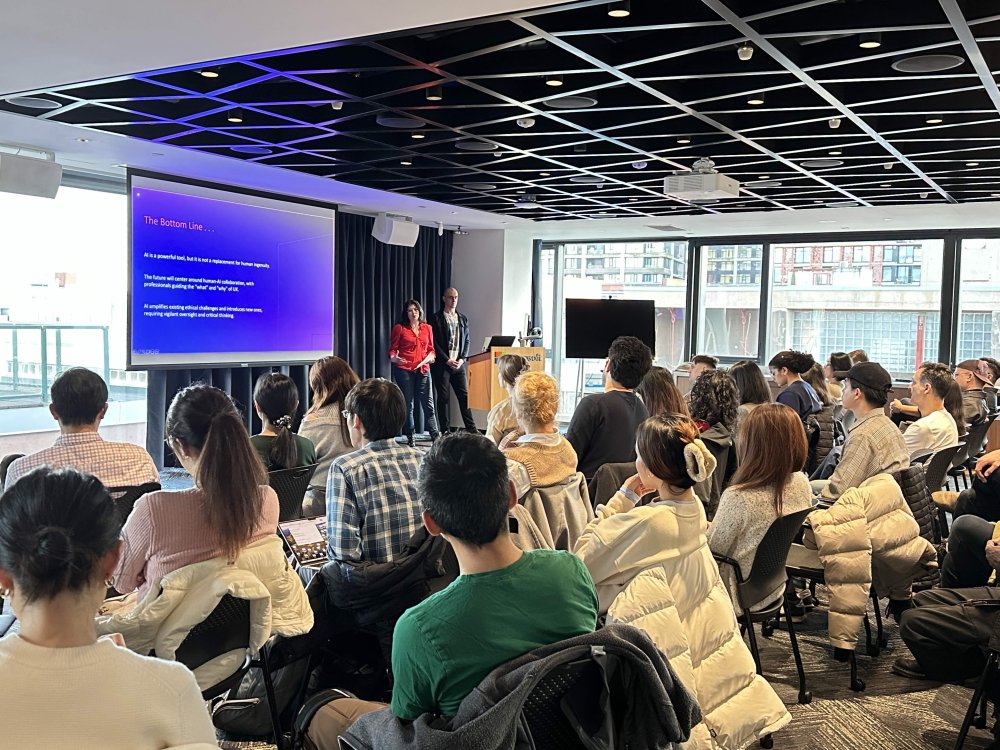

TOP 3 RECOMMENDATIONS FOR ORGANIZATIONS CONSIDERING AI SOLUTIONS:
AI is revolutionizing the way organizations approach problem-solving and innovation. We've identified three top recommendations for integrating AI solutions effectively into your business.
1. Outline the problem you’re trying to solve – don’t skimp on the up front research
With an abundance of AI as a Service (AIaaS) options on the market, you may be tempted to adopt some of these products right away. However, as with any other tech, simply throwing AI at your issues won’t fix them. You need to fully understand the context and determine if you have a viable use case.
Trends show that experimentation with AI solutions is growing across industries, but the return on early explorations is not enough to sustain the initial pace of investment. Thus, your curiosity around AI should also be funneled into understanding how to tie together corporate strategy, business operations, and customer experience, agnostic of whatever tech you eventually implement. And, if you do go ahead with AI, you’ll also have to consider the long-term structures necessary to support this rapidly-evolving tech.
2. Be clear on what the system can and can’t do
Whether you’re considering AI solutions for your staff or clients, you need to understand these people as users of a technology that is relatively blackboxed – it is not obvious what is going on between human input and machine output.
While it is not necessary to explain to users how an AI system works, it is crucial to clearly communicate what it can and can’t do. This is an important tenant for designing for AI and is outlined in both Google’s People and AI Guidebook and Microsoft’s Guidelines for Human-AI Interaction.
3. Build in reviews and improvement
Over the past year, Spatial has been working with Meta on Gen AI and Meta AI in various contexts across headsets, ads, and avatars, and we were happy to come across a recently published article that outlines their approach to building trust.
The post highlights how Meta’s AI assistant “acknowledges when it makes mistakes and asks for feedback, demonstrating a willingness to improve.” This feature lets users know that there are reviews in place and human input is influential. Even if the user does not need to report an error, the simple presence of the thumbs up/thumbs down button signals that AI can be wrong and should be considered with that in mind. While building trust in AI is important for user adoption, encouraging active engagement with and contextual understanding of AI systems is crucial for a safe and healthy ecosystem.