
Becoming Student Centred
Using Service Design to reimagine communications and student services
Client University of British Columbia, UBC
THE CHALLENGE
The University of British Columbia (UBC) Student Services recognized the need to transform their communication strategies to be more student-centered. The primary challenge was to develop a comprehensive understanding of the existing communication systems, the various roles of stakeholders involved, and how these components interacted to serve the student body. By mapping out the current processes we identified key areas for improvement. This holistic view allowed us to pinpoint opportunities to enhance the student experience through more effective and targeted communications.
THE WORK
Initial Work
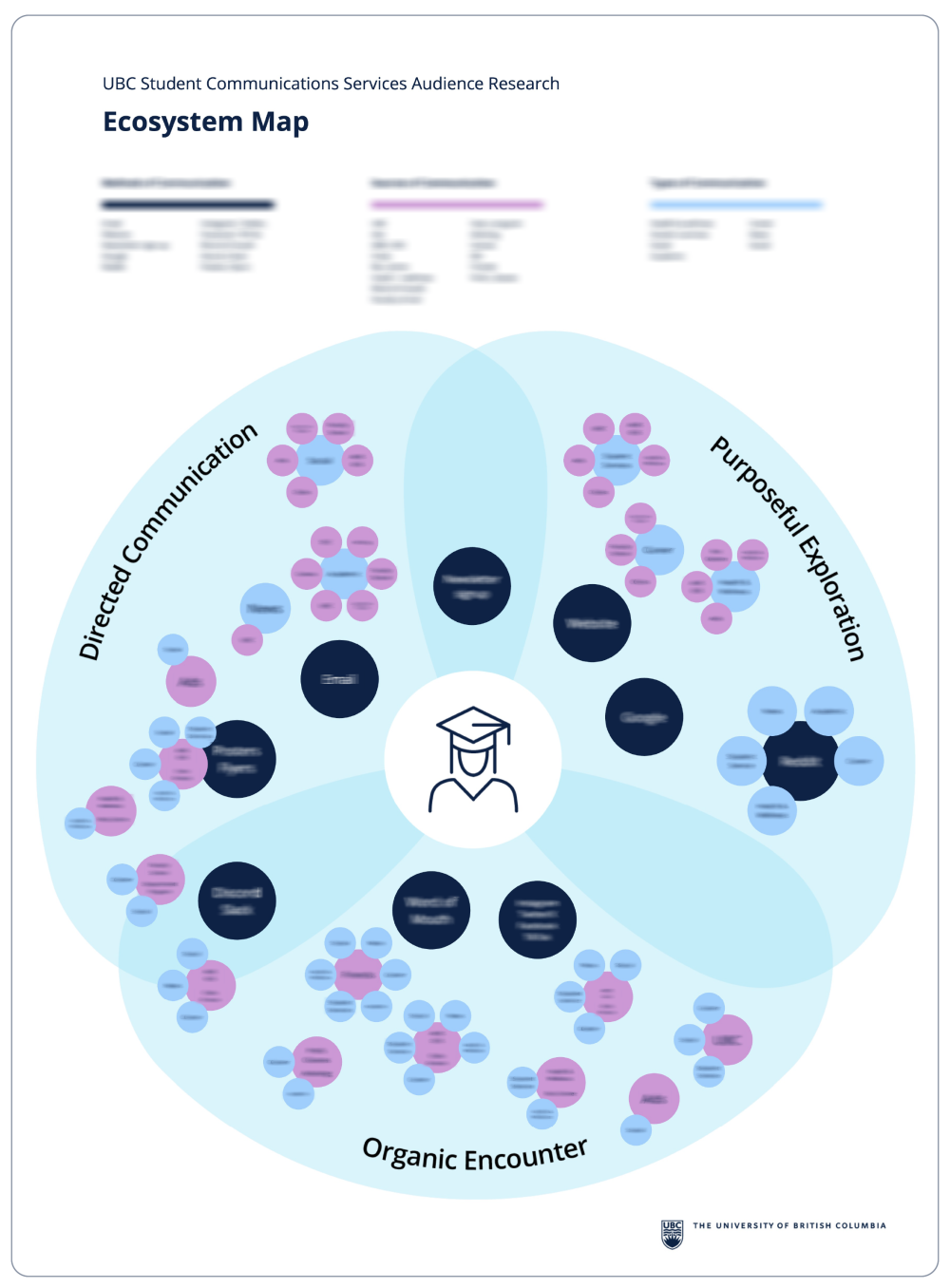
The project began with a comprehensive environmental scan and in-depth audience research, encompassing conversations with students and key service providers offering health, career, and financial aid. These interviews led to the development of detailed student personas, providing insights into the diverse user groups. Additionally, we created an ecosystem map of students' communication channels, clearly visualizing how information flows within the higher education environment.
REVIEWS & STAKEHOLDER RESEARCH
Following the initial research phase, we conducted a comprehensive heuristic evaluation, focusing on both UX and service design. This assessment allowed us to pinpoint the strengths and pain points within the student experience. Concurrently, our team undertook an organizational review, encompassing a series of in-depth stakeholder interviews. This dual approach facilitated a more nuanced understanding of the institutional context and ensured stronger alignment between our project goals and the organization's needs.
"Most impactful, to me, is that I’ve found this whole process clarifying on a deeper level, especially in terms of understanding how we can support students in such a complex institution.”Katja Clark, Director, Student Communications Services UBC
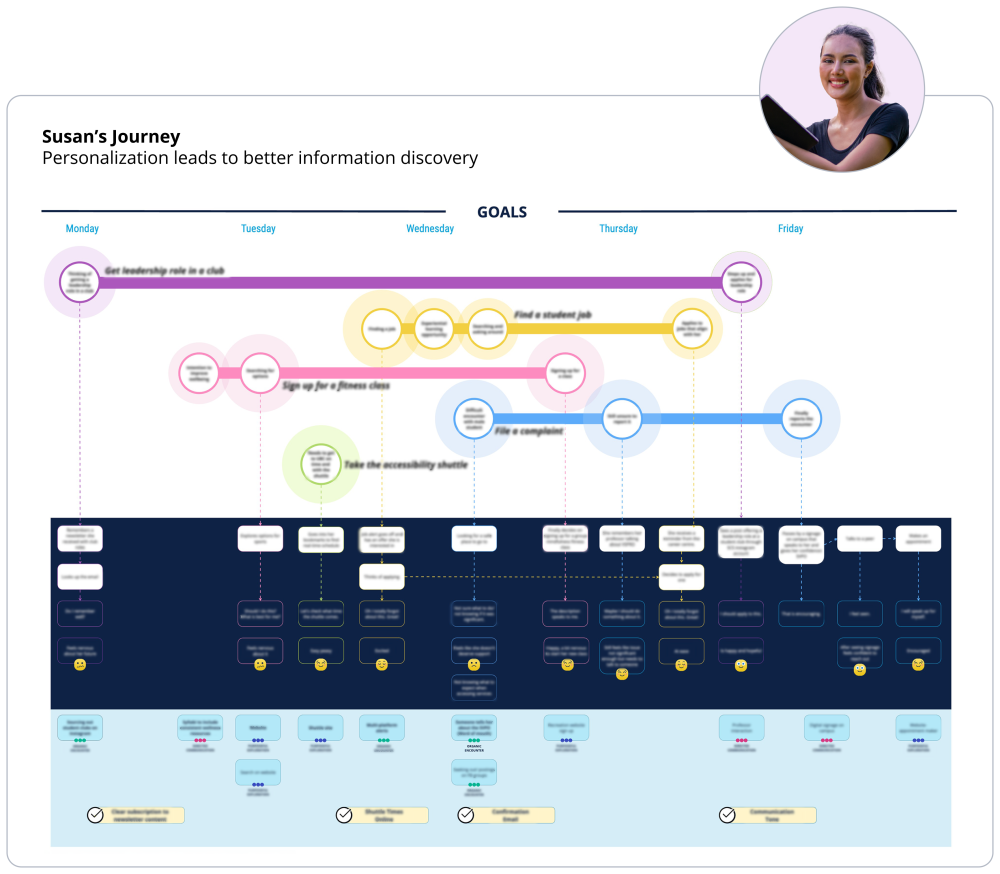
STUDENT JOURNEY MAPS
A comprehensive workshop convened key stakeholders from across the institution to outline a future student experience in the form of a journey map. During this session, participants leveraged the previously developed student personas to create comprehensive scenarios for student journey maps. This collaborative approach facilitated a rapid yet thorough examination of the student experience, viewed through the lens of each persona's unique needs and challenges.
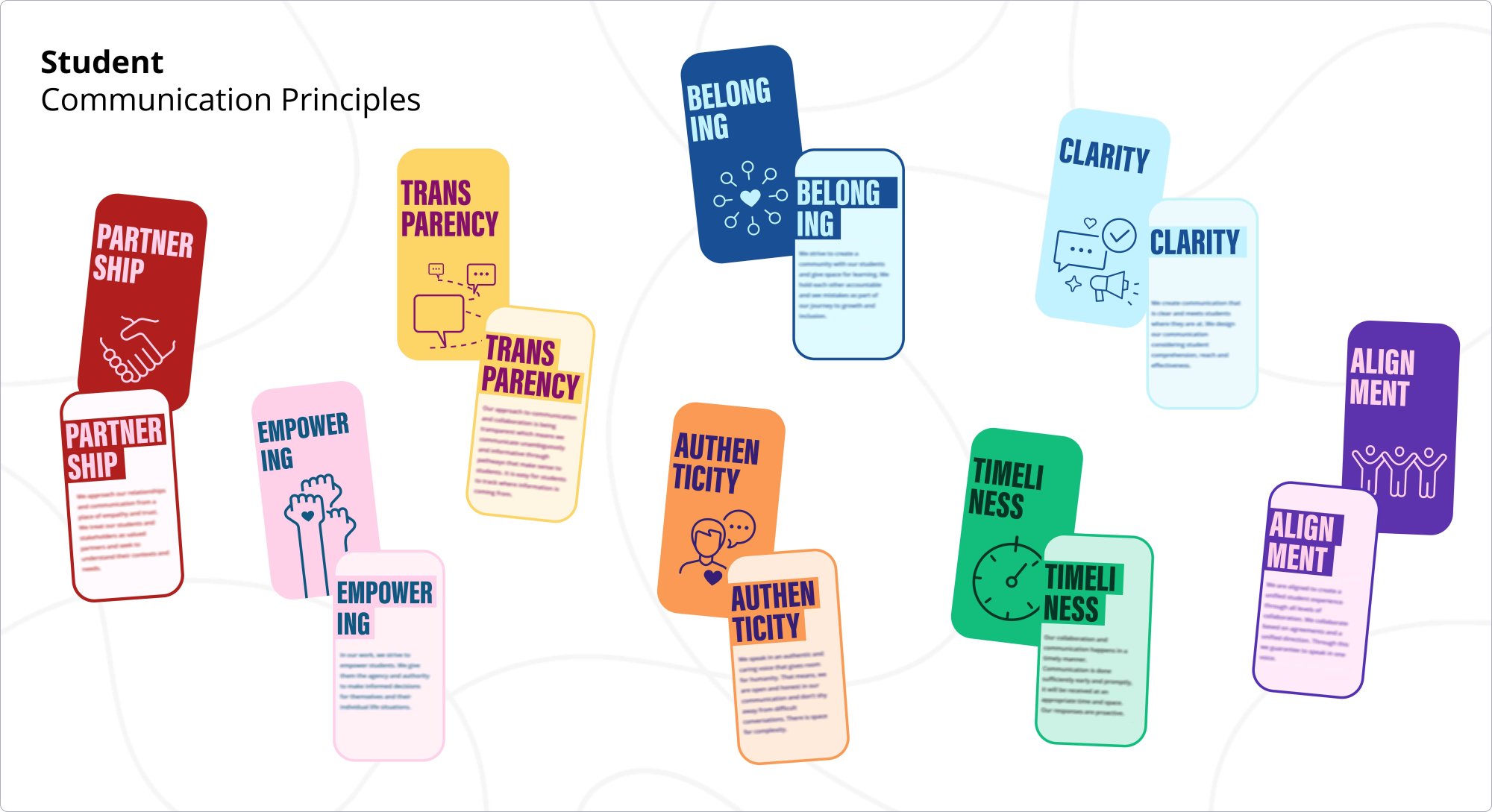
COMMUNICATION PRINCIPLES FOR STAKEHOLDER ALIGNMENT
A hands-on workshop, facilitated by Spatial, brought together staff representatives with diverse roles and perspectives. Through collaborative exercises, participants distilled and articulated a set of core communication and collaboration principles, establishing a unified foundation for future strategic initiatives.
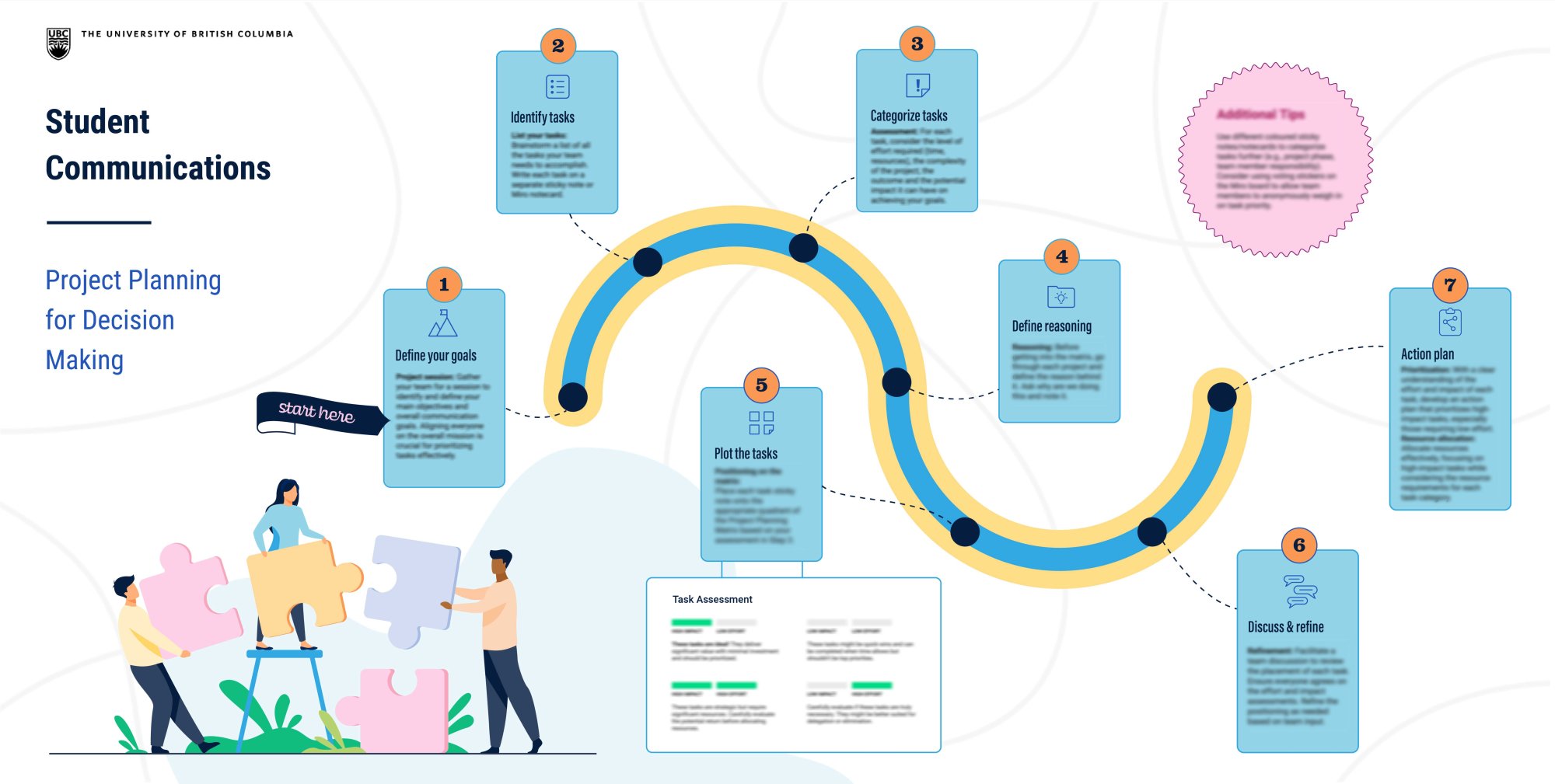
COMMUNICATIONS PROJECT PLANNING MATRIX
The innovative project planning matrix serves as a strategic tool for prioritizing student communication activities. It enables the efficient allocation of limited resources, optimizing time and effort across initiatives.
OUTCOME - LANDING PAGE
As one outcome, a new structure for a landing page was created to increase student satisfaction and give them a better experience.